Why Your E-Commerce Store Needs Edge Computing

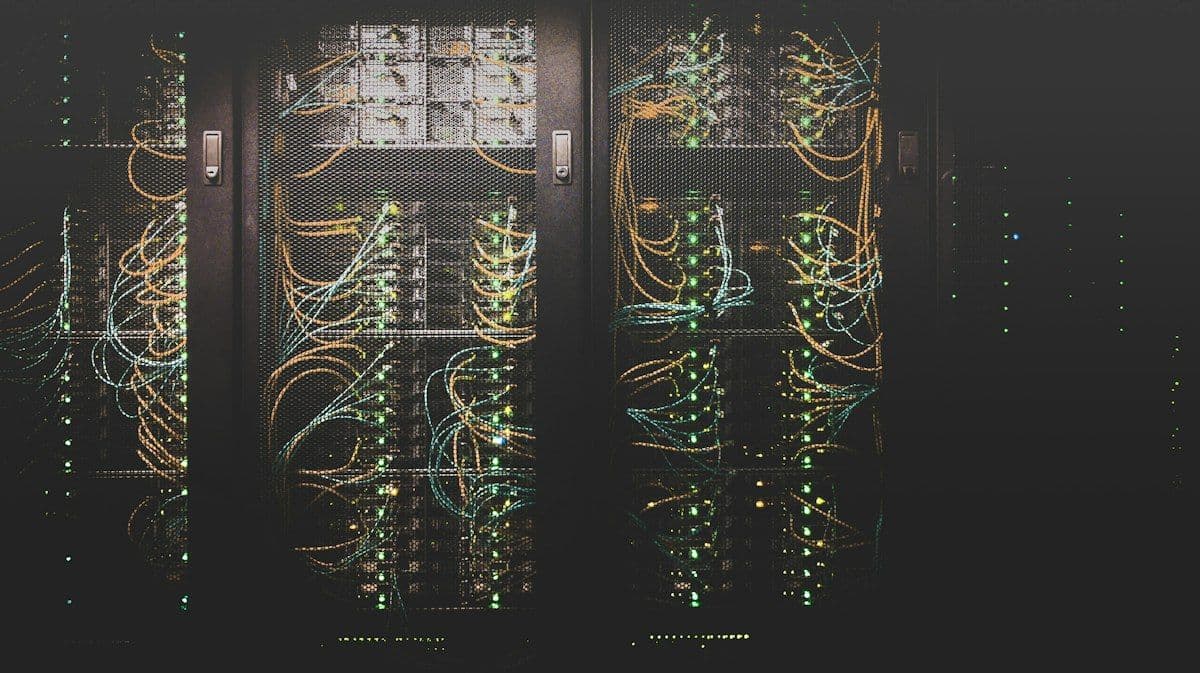
Every millisecond counts in E-Commerce. Studies consistently show that if your store takes longer than 2 seconds to load, conversion rates drop drastically. Users are impatient, and competitors are just a tab away. Edge computing solves this latency problem by deploying your application infrastructure as close to the user as physically possible.
Beyond Traditional CDNs
While Content Delivery Networks (CDNs) have cached static images, stylesheets, and HTML for years, modern web applications are highly dynamic. Showing a user their customized cart, their specific pricing tier, and real-time inventory cannot be cached statically across a traditional CDN without causing severe inconsistencies.
This is where Edge computing completely revolutionizes web architecture. Instead of just caching static assets, the Edge brings the actual server logic—such as Next.js API routes, personalized product recommendations, and database middleware—directly to the edge node.
When an active buyer in Tokyo adds an item to their cart, the request doesn't have to travel all the way to a central server in Virginia. It executes right there in Tokyo, delivering near-instantaneous checkout experiences.
The Architecture of the Edge
Transitioning to an Edge architecture involves fundamentally rethinking how your application is built. It relies on a trifecta of modern infrastructure:
- Edge Functions: Lightweight serverless functions that run in data centers around the globe. Unlike traditional serverless functions (like AWS Lambda) which suffer from cold starts and are bound to specific regions, Edge functions run on V8 isolates. This means they spin up in under a millisecond and run in the data center physically closest to the user making the request.
- Distributed Databases: Running logic at the Edge is useless if that logic has to cross the ocean to query a centralized database in Frankfurt. Distributed databases (like PlanetScale, CockroachDB, or global Redis instances) replicate your data across multiple regions so that data reads are entirely local.
- Middleware: Intercepting requests at the edge to perform instantaneous authentication, localization, or A/B testing before ever hitting your main application. Middleware can read the user's location via their IP and rewrite the URL to serve a localized storefront without a single redirect flash.
Solving the Cold Start Problem
Historically, adopting a serverless architecture meant dealing with "cold starts"—the 1 to 3 second delay that occurs when a function hasn't been invoked recently and the cloud provider has to spin up a new container.
Edge functions solve this by avoiding containers entirely. By utilizing WebAssembly (Wasm) and V8 Isolates, thousands of edge functions can run concurrently on a single machine, isolated by memory rather than heavy virtualization. The result is a cold start time of practically zero.
"In a world where algorithms dictate visibility, speed is not just a UX metric—it is a fundamental SEO ranking factor."
Personalization at the Speed of Light
Modern consumers expect hyper-personalized experiences. When a user logs in, they want to see their previously viewed items, AI-driven recommendations, and dynamic pricing tiers.
By moving the personalization engine to the Edge, you can evaluate complex machine learning recommendation models geographically near the user. Instead of the client downloading a heavy JavaScript bundle to render the recommendations, the Edge server fetches the user profile from a distributed Redis cache, computes the layout, and streams the finished HTML directly to the browser.
Real-World Impact on Conversion
We recently migrated a major retail client to a fully Edge-rendered Next.js architecture. By shifting their product recommendation engine, shopping cart logic, and authentication layers to the edge, their Time to First Byte (TTFB) decreased by an astonishing 78%.
The business result? A sustained 14% increase in checkout completions and a massive drop in abandoned carts, simply because the UI stopped lagging during the critical payment flow. In the modern web, speed is not just a metric—it is a competitive moat.